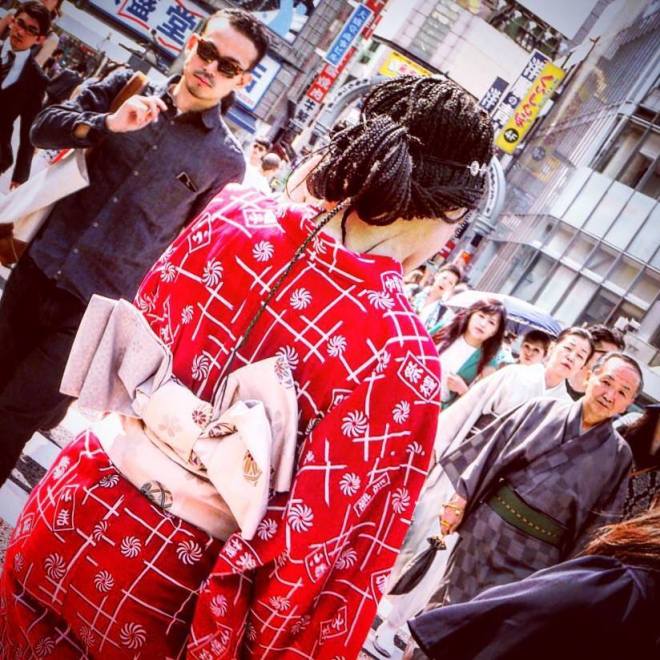
Japan’s diverse culture, hi-tech cities and prominent natural landscapes makes it one of my favourite destinations. Experiencing a culture far from my own made Japan for me an ideal location. I flew into Tokyo and after a few days of exploring the capital of Japan I took a bullet train to Kyoto the forma capital of Japan, Kyoto is a traditional but also very modern city with over 1000 Buddhist temples and shrines. I visited a couple of shines and temples before heading to my last destination Hiroshima. My two weeks in Japan were some of my best in Asia, I hope this short summary of Japan will help you plan your trip.
Best Time to Visit
Japans spring from March to May and autumn September to November is the best months to travel if you want to see the cherry blossom and red leaves which make scenery picturesque. For those of you that are hikers the summer months offer ideal conditions for hiking the mountains of the Japanese Alps. The Winters from December to November are a great time to enjoy many festivals and events.
Things to do and see
- Arashiyama bamboo Forest is an ideal place to walk or cycle, the tall bamboo stalks looks amazing as you walk around the pavements of the forest. The bamboo is was used to manufacture lots of goods over the centuries, like baskets, boxes and mats.

- Fushimi Inari-taisha is a complex with five shines, there is wooden red slopes make a pathway 4km up a mountain. It’s a great place to spend the day when in Kyoto.

- Itsukushima Shrine is unique in that it’s a shrine built over water, the shrine complex surrounds many buildings and a prayer hall, which are all connected by boardwalks.
- Mount Fiji Is the highest mountain in Japan at 3776 meters. The mountain looks amazing from afar and is also very popular mountain to hike.
Food
Japan has the most michelin star restaurants in the world. Kaiseki is very popular in Japan and is a combination of multiple courses a tasting menu. The most popular of the dishes include Hassun which is a collection of small bites and Agemono which is deep fried dishes. Soba restaurants and Sushi are also very popular in Japan. Japanise food can be very expensive in Japan but it is also very easy to find food which are reasonable priced. Noodles are an excellent lunch option in soup or fried dishes. Other favourites include bento boxed lunches. Traditional Japanese drinks include sake, (a must try)There are also many restaurants that serve international dishes in all the major cities.
Transportation
Air: There are direct flights from London to Japan. There is an extensive network of flights connecting all Japan and the Islands. There are budget airlines also connecting most of Japan.
Roads: Japan has a network of well-maintained roads that connect the whole country. Road signs are written in Japanese and in English. Drivers drive on the left-hand side of the road.
Taxi: There are metered taxi’s in all the large cities in Japan. Uber is also operating in Japan
Bus: There are regular day time and night time long-distance buses that connects most of the country. It’s a very cheap way to travel around Japan.
Ferry: There are domestic ferry connections between the four main Islands in Japan, as well as thousands of smaller Islands. Bullet train services also travel to many ports, making it easy to travel and connect.
Rail: The Japan rail pass is popular amongst tourist saves you a lot of money on your travel in Japan, you must buy the pass before you arrive in Japan. There is an option to buy a 7,14- or 21-day pass. It can be used on all JR trains, buses and Ferries. The pass will also get you discounts on JR hotel Groups and car rental packages. All Japans largest cities have a subway system.
Visa
Visas are not required by all EU, U.S, Canadian and Australian nationals for travel to Japan.
Language
Japanese is the official language of Japan. Some English is spoken in large cities.
Money
The official currency in Japan is the Yen (JPY). Major credit cards are accepted in most hotels and restaurants, The Japanese Post Office ATMs in major branches accept foreign issued debit and credit cards, as do most hotels and stores.
Tipping
There is no culture of tipping in Japan.
Social etiquette
In Japanese Bowing is the customary greeting, however as a visitor you won’t be expected to do this. The honorific suffix san should be used when addressing adults. When entering a Japanese home or restaurant it is customary to remove shoes. When entering hot-spring baths, which are normally segregated, you must first have a shower enter the hot-spring naked. After eating leave your chopsticks vertically in the rice bowl.
Racism/Sexism/Discrimination
Adaptor
Japan has two associated plugs, one type has two flat parallel pins, the other type has two flat parallel pins and a grounding pin. The voltage supply is 100V and 50/60Hz


Wifi
Wifi is available throughout Japan, there are many free internet hotspots in larger cities. Internet cafes are spread out in the larger cities like Tokyo and Kyoto.
 Ruth’s Lonely Planet