Ethiopia is the only African country to have not been colonialised by Europe. There by maintaining much of its cultural identity and heritage. Which can be seen when exploring this amazing country, With its ancient churches and castles. In addition to the ancient sites there are also beautiful mountains and volcanic landscapes. Ethiopia is also considered the birth place of the first humans with the finding of the oldest skeletal remains. My time in Ethiopia was very short and I cant wait to go back and visit all the remaining UNESCO world heritage site.
BEST TIME TO VISIT
Generally, the best time to visit is during the dry season from October to June.
Things to do and see
- Aksum (Axum): Aksum is the place were Queen of Sheba lived, where the Ark of the covenant and the three wise men are believed to be buried. This city is full of ruined tombs and places still yet to be uncovered.
- Addis Ababa: Is the capital city of Ethiopia and a great place to try traditional food and visit great museums.
- Gondar: Gondar is considered the Camelot of Ethiopia because of the 17century castles. A beautiful town to admire what’s left of Ethiopia’s royal city.
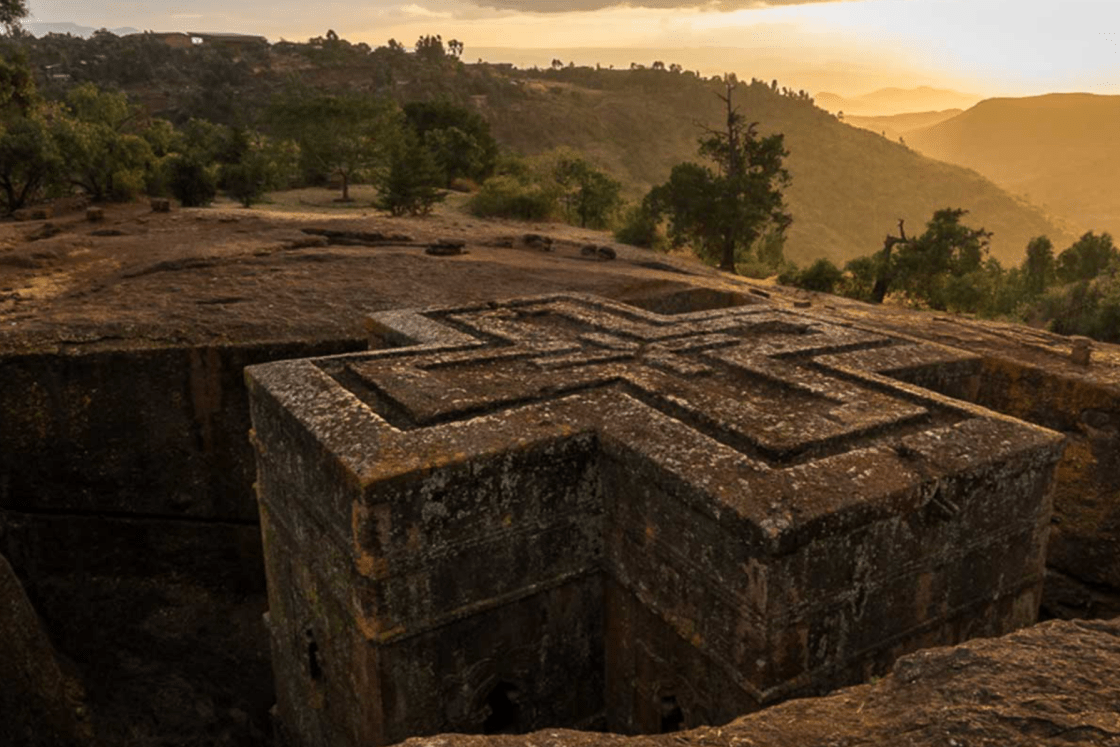
- Church of Saint George: Is a 900-year-old church carved from solid rock set deep underneath the ground. The church is one of eleven churches built around mountains. Christians come to the town of Laliebla on Pilgrims from all over Ethiopia. The church is also a UNESCO world heritage site.
Food and drink
Ethiopian food is based on a pancake like bread made from a grain called tef, the grain is mixed with water and fermented for three days then cooked. This pancake like bread is served with meats and vegetables. Pork is not used because most Ethiopians are orthodox Christians, Muslims or Jews. Ethiopia has a few alcoholic drinks that date back to thousands of years ago. They use fermented honey and grains to make different types of alcohol.
Transportation
Air: Ethiopia has domestic and international flights, domestic destinations include Shilavo, Arba Minch, Shire, Assosa, Semera, Bale Robe, Dire Dawa, Gambella, Gode, Hawassa, Jijiga, Jimma, Kabri Dar, Komboicha and five other destinations.
Road: Almost every major road in Ethiopia is tar-sealed. During the wet season some roads in the east and west can be dangerous to drive on. Drivers drive on the right-hand side of the road. Ethiopia borders six countries, Sudan, South Sudan, Djibouti, Eritrea and Somalia; it is possible to safely drive through all border crossings.
Buses: There are a network of yellow and red public buses which are cheap to use but can be over crowded. There are also private own buses which are more comfortable and work between major destinations. The two major private bus companies are (Selambus.wordpress.com) and (skybusesthiopia.com). Buses in Ethiopia are not allowed to travel after dark, so long journeys are usually split into two days.
Rail: There is a rail service in the capital city Addis Ababa. The service has two lines, the blue line runs from Menelik 11 square to Kality. The Green line has 22 stops from Tor Hailoch to Ayat. All stop announcements and signs are in Amharic and English. There is also a rail service from Djibouti city to Addis Ababa.
Taxi: In Addis Ababa there are two types of taxi’s, you can hire the yellow meter taxi or the blue taxi which is older and doesn’t have a meter. In both taxi’s it is a good idea to negotiate the price before starting your ride. Uber does work in Ethiopia, the alternative app is Zayride, which is used in Addis Ababa. Shared taxi’s and minibuses are used mainly in small towns and villages.
Visa
Visas are required by all EU, U.S, Canadian and Australian nationals; E-visas can be purchased online. Visas on arrival are also available.
Language
The official language spoken in Ethiopia is Amharic. English is also widely used, as well as 80 other native languages.
Money
The currency in Ethiopia is the Ethiopian Birr (ETB). Visa and Master cards are accepted in most hotels and restaurants in the major cities. ATMs are available throughout major cities.
Tipping
In most hotels and restaurants 10% is included on the bill. Tipping is common, but the amounts are small.
Racism/Sexism/Discrimination
Social etiquette
If you dine at a traditional Ethiopian restaurant, you will be given soap and water to wash your hands. Only the right hand is used when eating. Religion is a major part of Ethiopian life. Making it a very traditional and conservative society. When visiting religious sites women must cover their hair, some churches only allow male visitors, so be sure to do your research.
Adaptor
Ethiopia operates on a 220V and voltage of 50HZ. There are two types of plugs used, the two round pins and the two pins with two earth clips on the side.


WIFI
Wi-Fi is available in most hotels; however, the reception is not very good and can be restricted by the government during school exams.
 Ruth’s Lonely Planet