
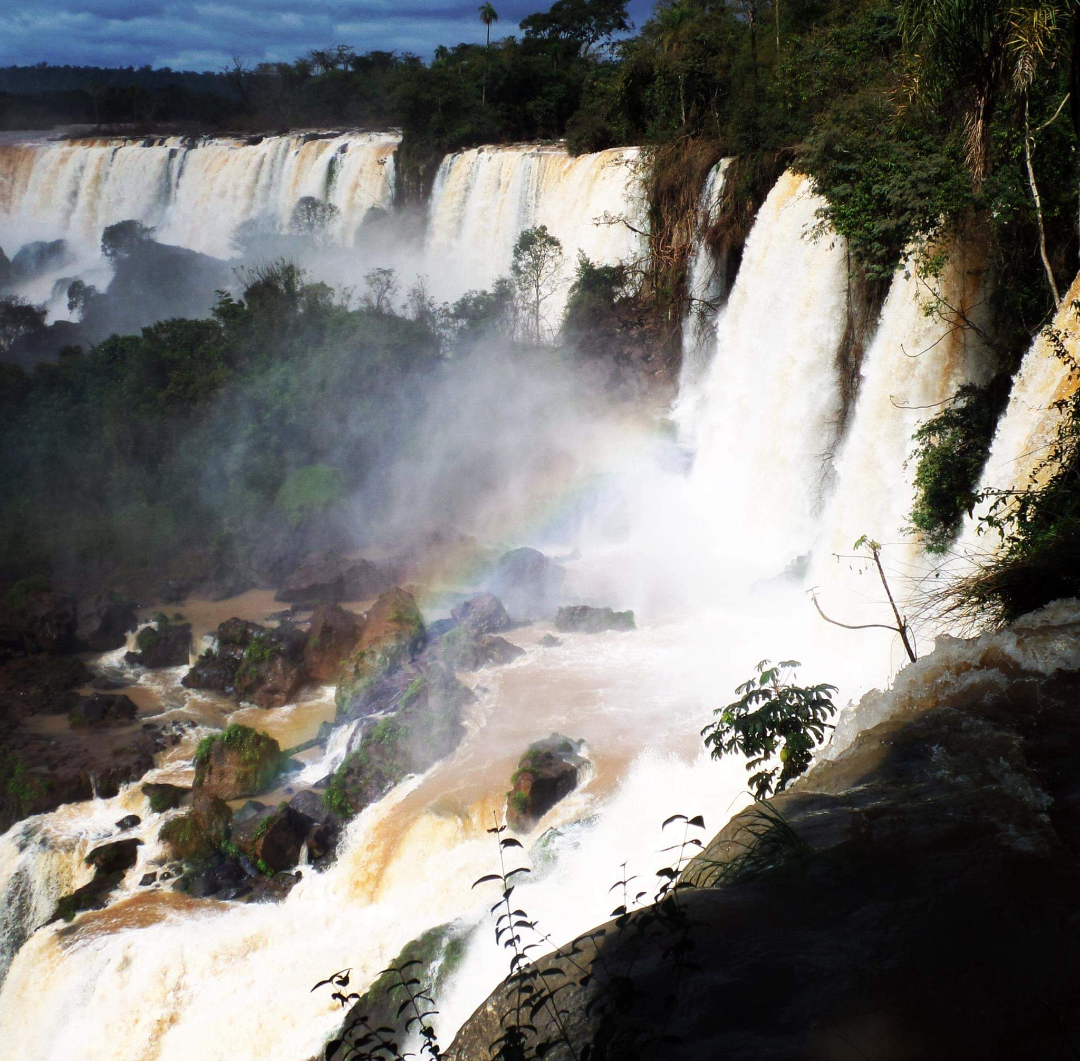
Argentina has a population of 45.1 million is a country so full of intense personality and passion, it seduces the heart of any traveller. Street side tango, hidden bookstores and quirky gourmet eats are just some of the reasons why this country needs to be on your bucket list. Argentina’s human culture blazes as brightly as its natural wonders, from the sinuous tango dancers of Buenos Aires to the gauchos (cowboys) who ride on far-flung grasslands and estancias. Our specialists are able to plan an Argentina tour that takes in all the country’s major attractions, including the saw-toothed Perito Moreno Glacier, the gargantuan Iguazu Falls, and the plazas, museums and cafes of the capital itself.
But they’re also ardent about introducing you to Argentina’s unsung treasures. They can show you corners of Argentinian Patagonia that deliver as big a scenic punch as Chile’s Torres del Paine National Park but receive far fewer visitors. You might find yourself staying at smaller, family-run, off-the-beaten-track wineries in Mendoza, or visiting Salta, a fine colonial city in the northwest. Your holiday to Argentina could even include a journey to the far-flung Valdes Peninsula to spot whales, penguins and sea lions.
BEST TIME TO VISIT
Spring (September – November) is considered the best season to visit the country as a whole. With incredible weather during this time, it makes perfect for sightseeing and exploring. Summer is typically when the north really heats up, so head south and enjoy the beaches, lakes and Patagonia’s beauty during December – February. March – May is when you should tour the autumn warm hues and world-famous wine regions.Whilst December to March are the months in which Patagonia in the south of Argentina is most easily accessible, the whole country can be visited year round. The weather in Buenos Aires is generally hot over these months but a visit in the cooler, crisp months of July and August can be delightful. The Lake District comes alive with wildflowers over spring (September to November), whilst autumn in the wine valleys surrounding Mendoza features gold and copper coloured vines, stark against the backdrop of the Andes.
Things to do and see:
Salta: Explore the cobbled streets of Salta by foot and take in the colonial architecture. Enjoy the slow pace of the city, eat a meal at one of the many street side cafes and listen to the buskers perform Folk tunes all day long.The capital city of Argentina, Buenos Aires, is a flirtatious combination of Latin and European influences. By day,
Coredoba: An inspiring blend of old and new, Córdoba is an underrated city and the local’s best kept secret. The charming towns brushing the countryside, amazing parks amongst the busy metropolis, rolling hills full of legends and tales and hip nightlife are some of its perks.The capital city of Argentina, Buenos Aires, is a flirtatious combination of Latin and European influences. By day, admire the unique street art, dine in the abundant restaurants a
Mendoza: If wining and dining is your thing, Mendoza needs to be at the top of your list. While the locals love its streets lined with leafy arches, laidback culture and surrounding snowcapped mountains, tourists flock to taste the world-renowned wines this city inhabits.The capital city of Argentina, Buenos Aires, is a flirtatious combination of Latin and European influences. By day, admire the unique street art, dine in the abundant restaurants.
Buenos Aires: The capital city of Argentina, Buenos Aires, is a flirtatious combination of Latin and European influences. By day, admire the unique street art, dine in the abundant restaurants and cafes, visit the galleries or spectate a local football match. By night, listen to the tango tunes seeping out of the nightclub walls and watch an opera performance at the theatre.
The capital city of Argentina, Buenos Aires, is a flirtatious combination of Latin and European influe
Food and drink
The national dish is Asados, Vegetarians beware: Argentine food can be summed up in one simple word – ‘beef’. The cornerstone of the Argentine economy and diet, beef features heavily in the barbeques or asados which are a tasty tradition. The other national delicacy is dulce de leche, an exceedingly sweet and sticky goo that is eaten on bread, in cakes or just off the spoon. And to drink, the Argentines have mate as their national beverage.
How to Get Around
Uber started operating in Buenos Aires officially on April 12, 2016. Despite the resistance from the taxis union and the local government, UBER continues to operate normally in Buenos Aires, and it is one of the most efficient ways to navigate the city, especially for tourists and expats.Transport in Argentina is mainly based on a complex network of routes, crossed by relatively inexpensive long-distance buses and by cargo trucks. The country also has a number of national and international airports. Buenos Aires is the only Argentine city with a subway system (known as the Subte), and it’s the quickest and cheapest way of getting around the city center.
Trains serve most of Buenos Aires and some surrounding provinces. During the holiday periods, such as Christmas or national holidays, buy tickets in advance. Train fares tend to be lower than comparable bus fares, but trains are slower and there are fewer departure times and destinations. Long-distance trains have sleepers.
- The national carrier, Aerolíneas Argentinas, offers the most domestic flights, but it’s not necessarily better than its competitors.
- Other airlines with domestic flights include LATAM, Andes (www.andesonline.com) and Líneas Aéreas del Estado (LADE; www.lade.com.ar), the air force’s passenger service. Norwegian Air (www.norwegian.com/ar) was also planing to add regional flights at the time of research.
- At the time of research, a spate of new low-cost airlines were in the process of implementing regional flights between provinces, a service that is changing travel patterns throughout Argentina. For listings, see individual cities.
- Demand for flights around the country can be heavy, especially during some holidays (such as Christmas or Easter) and the vacation months of January, February and July. Seats are often booked out well in advance, so reserve as far ahead as possible.
- Nearly all domestic flights land at Aeroparque Internacional Jorge Newbery, a short distance north of downtown Buenos Aires. It’s worth noting that Argentina’s domestic flight system can be very unreliable – flights are often cancelled or delayed, and there can be frequent labor strikes. It might be a good idea to avoid tight itineraries; for example, leave a day’s cushion in between your domestic and international flights.
VISA
Visas are not required for all EU, U.S, and Australian nationals for stays of up to 90days over a 6month period. for any other passports check before booking your flight.
Language
The official language is Spanish. English is widely used by many in the tourist industry.
money and expense
The currency is the Argentine Peso (ARS). In theory, US banknotes may be accepted as currency, but not coins. Automatic cash machines are widespread, especially in the cities. Most machines take all credit cards.
Tipping
Tipping for good service is discretionary.
Social etiquette/ Culture
Please ask permission before taking photographs. Argentina is greatly influenced by European backgrounds, particularly Spanish and Italian. The country holds the title for being the ‘world’s largest consumer of red meat in the world’ and is renowned for its love of eating; most social gatherings revolving around meals. Football and mosts sports are huge in the Argentinian culture, along with tango.
Adaptor
In Argentina, the standard voltage is 220 V and the frequency is 50 Hz. This means you will be able to use all of your normal appliances in Argentina as the voltage is exactly the same as in the UK, making your journey much easier.

WIFI
The airports in Argentina have accessible free Wi-Fi and fast data speeds. However, once I got outside the airport…
 Ruth’s Lonely Planet